
Formula 1 Circuits 2026
Every circuit on the 2026 calendar, plus former venues that missed this year, with track details, lap records and race winners. 25 venues in total.
On the 2026 calendar
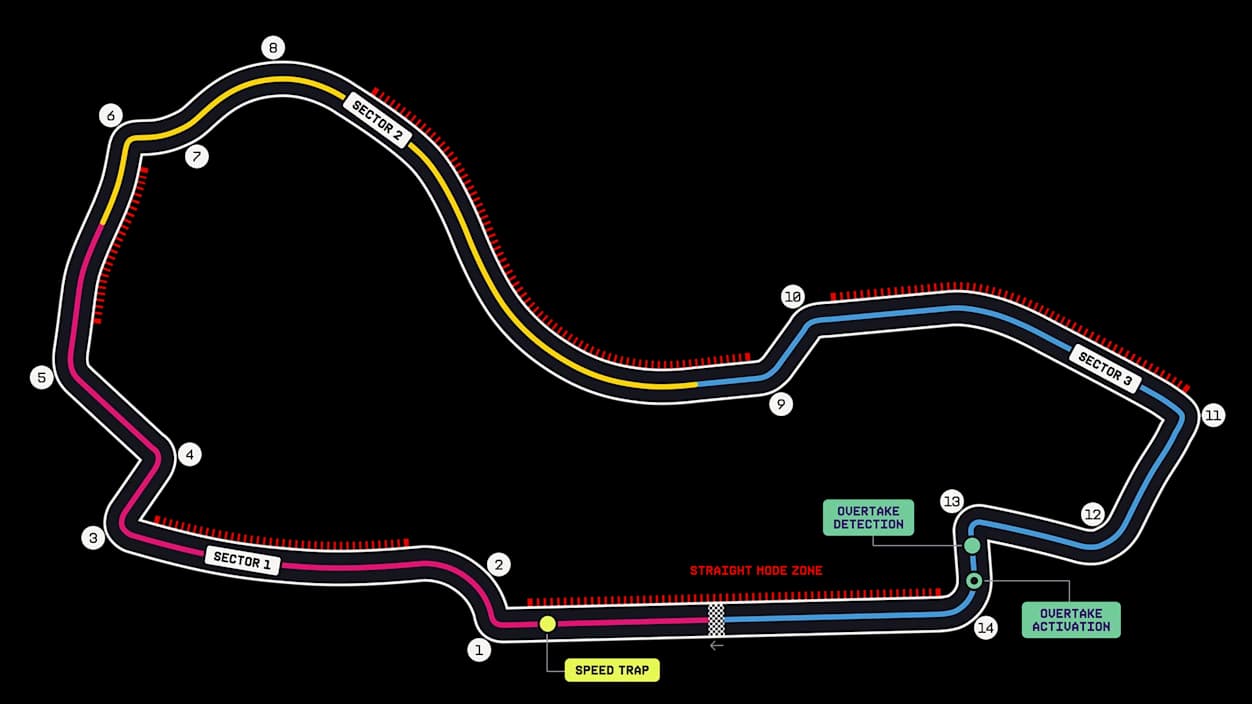

Albert Park Grand Prix Circuit
Melbourne, Australia
- Length
- 5.278 km
- Corners
- 14
- First GP
- 1996
Albert Park is a 5.278 km street circuit made up of public roads around the lake in a park a few kilometres south of Melbourne's city centre. The lap is almost flat and has few true straights, so it rewards smooth, committed driving and a car that copes with a low-grip, dusty surface at the start of the weekend. The layout was reworked for the 2022 return: the old Turn 9–10 chicane was removed, Turns 1, 3, 6 and 15 were widened and Turn 13 was reshaped. Turn 6 alone was opened up by about 7.5 m, which lifted its minimum speed from roughly 149 km/h to 219 km/h and made the lap several seconds quicker. The best chance to pass is at the end of the fast run along Lakeside Drive, which is more than a kilometre long. Overtaking is still hard elsewhere: cars following closely lose front-end grip through the medium-speed corners, and the walls are close, so incidents and safety cars are common. Melbourne's changeable weather can add rain, wind or a sharp temperature drop between sessions.
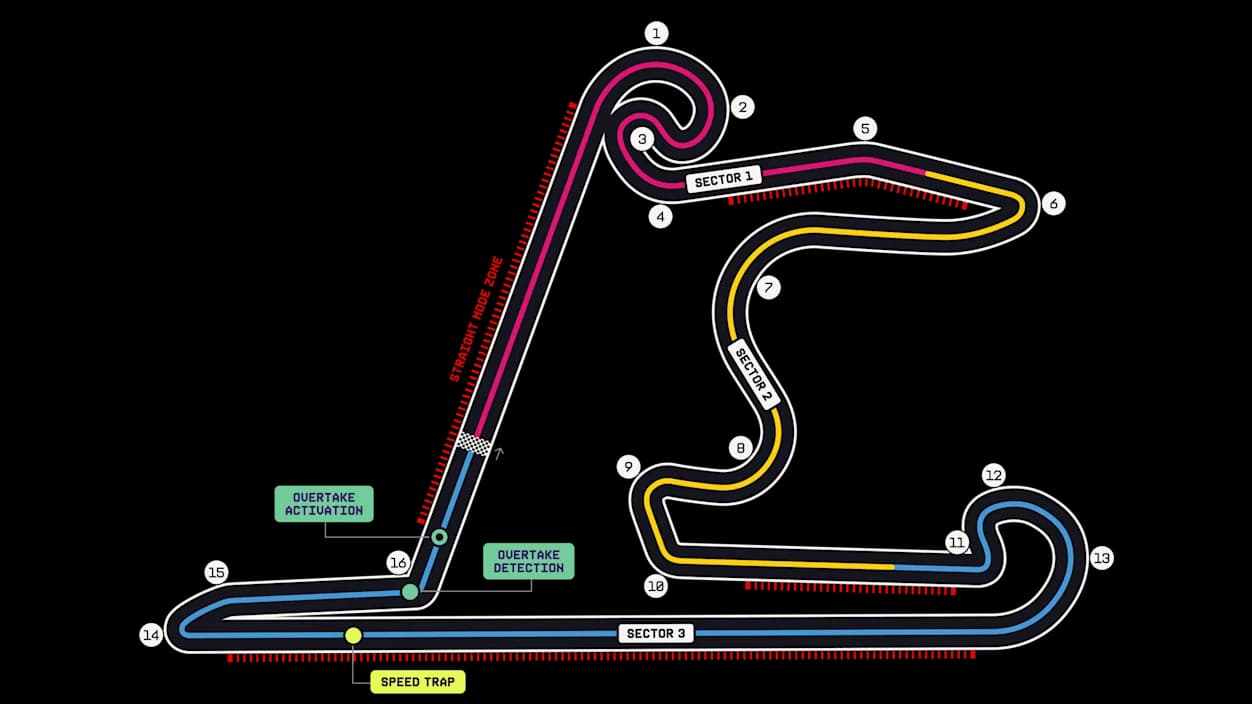

Shanghai International Circuit
Shanghai, China
- Length
- 5.451 km
- Corners
- 16
- First GP
- 2004
Shanghai International Circuit is a 5.451 km Hermann Tilke design in the Jiading district on the north-west edge of Shanghai. Its outline is inspired by the Chinese character "shang" (上), meaning "above" or "ascend". The lap opens with one of the most distinctive corner sequences on the calendar: Turns 1 and 2 form a tightening spiral taken at about 185 km/h before the slow Turns 3 and 4, which punishes drivers who lose the rear on entry. The back straight between Turns 13 and 14 is roughly 1.2 km long and ends at the Turn 14 hairpin, the circuit's best-known place to overtake. The mix of heavy braking, long sweeping corners and slow sections makes tyre management and front-end wear major concerns, and the circuit was resurfaced ahead of the 2025 season.
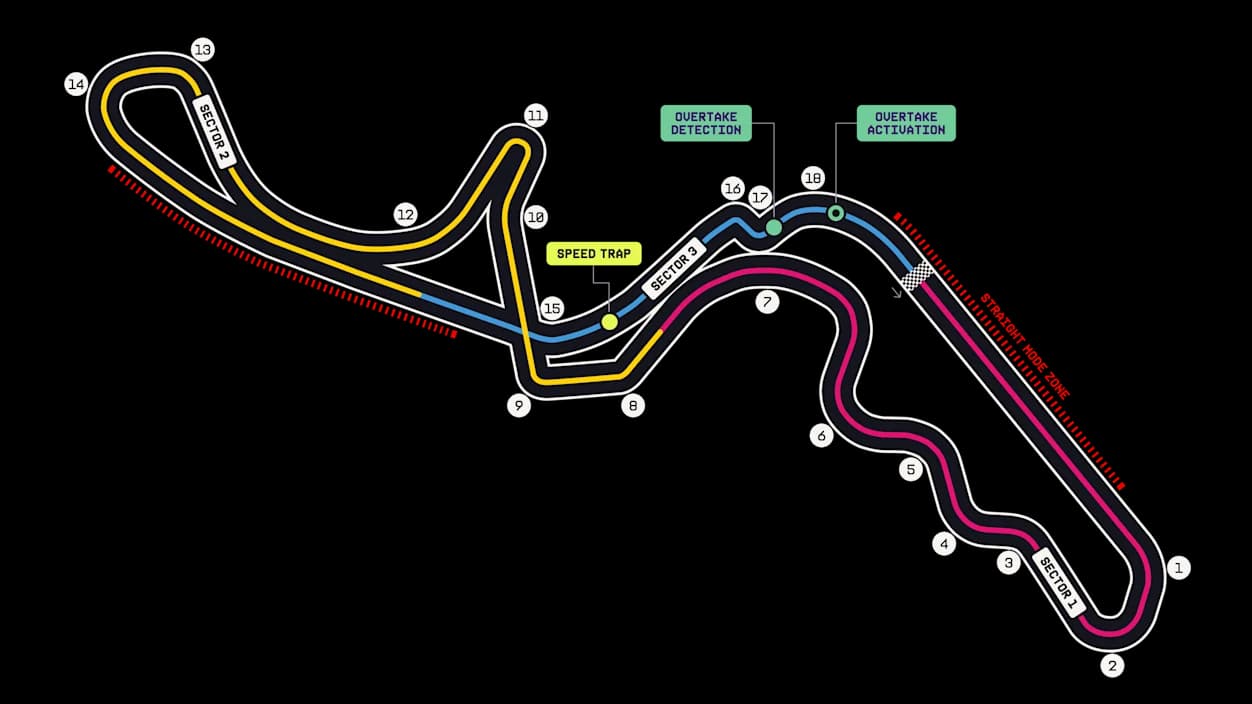

Suzuka Circuit
Suzuka, Japan
- Length
- 5.807 km
- Corners
- 18
- First GP
- 1987
Suzuka is a 5.807 km circuit in Mie Prefecture and the only Grade 1 track with a figure-eight layout: the 1.2 km back straight crosses over the front section of the lap on a bridge. It has 18 corners and a very high average speed, and it demands rhythm more than raw straight-line pace. The lap starts with Turn 1 and the S Curves, a quick left-right-left sequence that tests how well a car changes direction, then continues through the Dunlop and Degner curves, the hairpin and the long, fast Spoon. After the crossover the drivers go through 130R, a flat-out left-hander that was redesigned after accidents in 2002 and 2003, and finish through the Casio Triangle chicane. Overtaking is difficult, so qualifying position matters and strategy plays a large part. The fastest official race lap is Kimi Antonelli's 1:30.965 from the 2025 race.
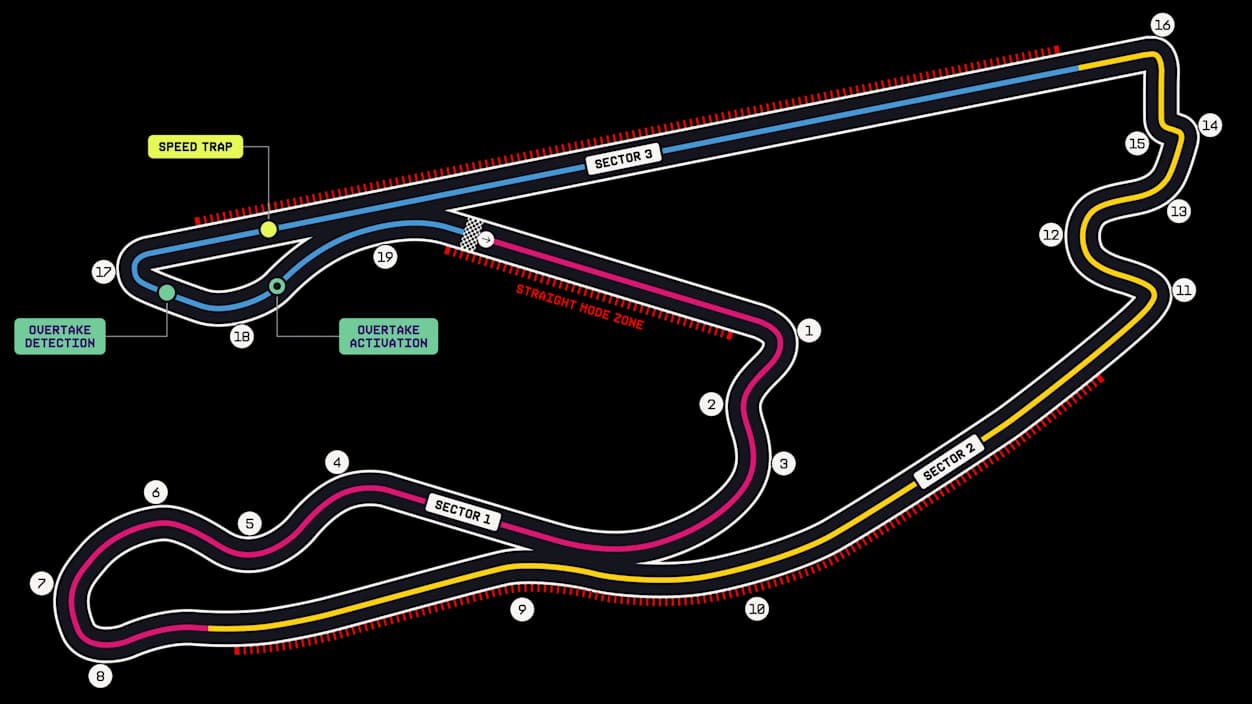

Miami International Autodrome
Miami, USA
- Length
- 5.412 km
- Corners
- 19
- First GP
- 2022
The Miami International Autodrome is a 5.412 km temporary circuit with 19 corners, built each year in and around the private grounds of the Hard Rock Stadium in Miami Gardens, Florida. It was designed by Apex Circuit Design and uses permanent asphalt paths and car parks, so it is a mix of purpose-built and street-style sections. The first sector is a fast, sweeping set of S-bends; Turns 6 to 8 form a triple-apex left-hander that loads the front-right tyre. There are two main braking zones for overtaking, at Turn 11 after the long back straight and at Turn 17 at the end of the following straight. The Turn 14–15 chicane has an uphill approach and a downhill exit. The surface was resurfaced in 2023 after drivers criticised the grip levels of the first race, and the lap record of 1:29.708 was set by Max Verstappen that year. In the 2026 regulations, teams can flatten the wings for Straight Mode after Turn 8 through Turn 11, between Turns 16 and 17 and on the start-finish straight.
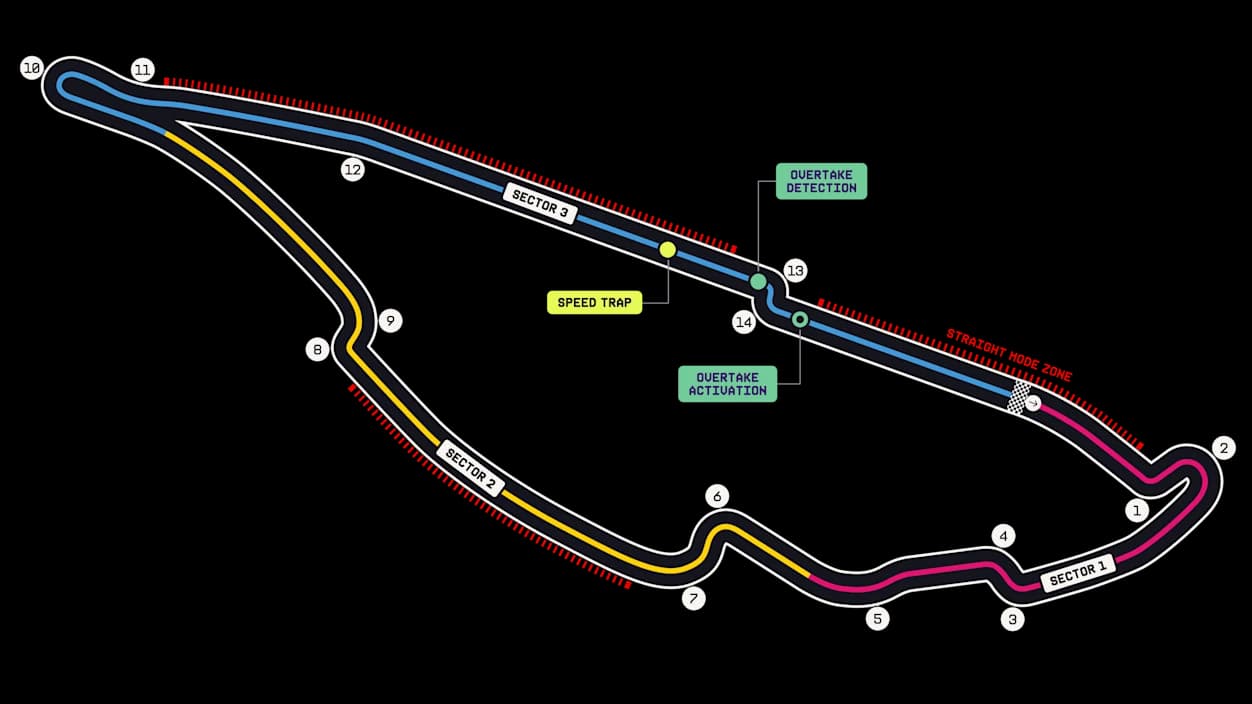

Circuit Gilles Villeneuve
Montreal, Canada
- Length
- 4.361 km
- Corners
- 14
- First GP
- 1978
Circuit Gilles Villeneuve is a 4.361 km track with 14 corners, laid out on the roads of Île Notre-Dame, a man-made island in the St. Lawrence River in Montreal. It looks like a stop-start circuit: the lap is a series of long straights joined by tight chicanes and one hairpin, so drivers are either flat-out or braking hard. That puts a lot of stress on brakes and power units, and cars run low-downforce settings to keep speed on the straights. The lap opens with the left-right Turn 1–2 sequence, known as the Senna S, and closes with a fast run to the last chicane by the Wall of Champions, at Turn 14. The Turn 10 hairpin is the best place to overtake. Track limits are strict, since the exits of many corners are lined by walls, and weather and safety cars have decided many races.
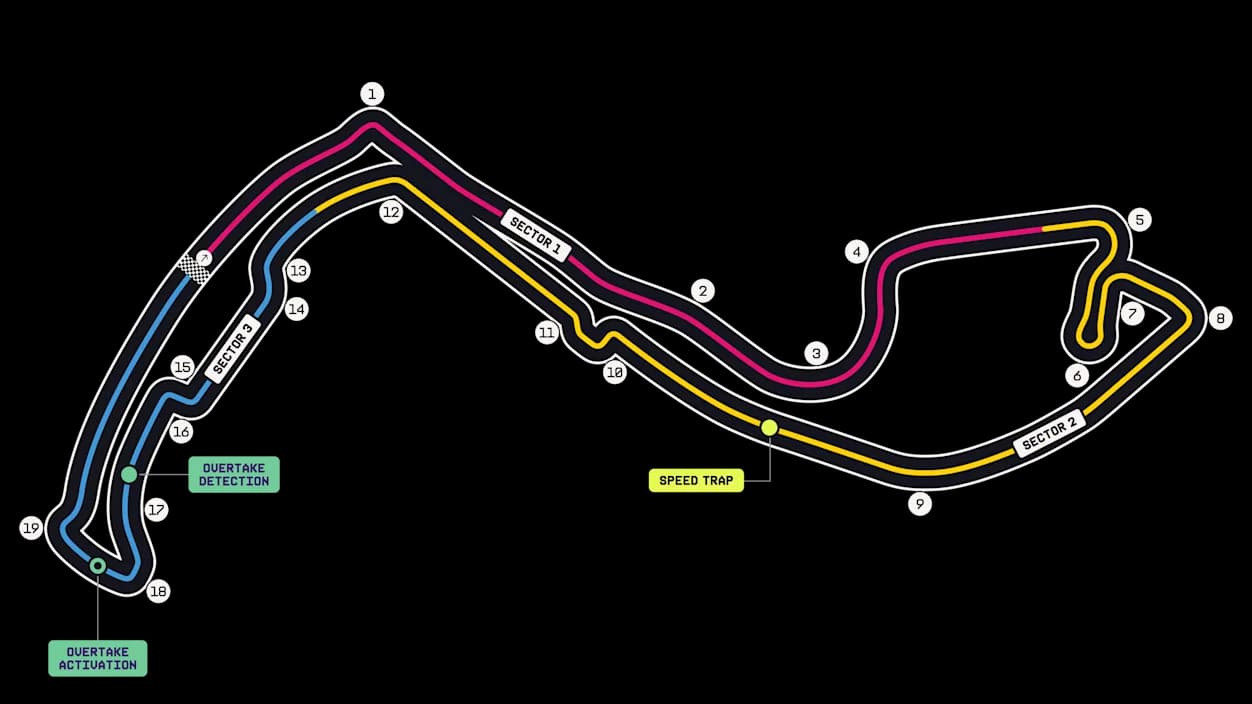

Circuit de Monaco
Monte-Carlo, Monaco
- Length
- 3.337 km
- Corners
- 19
- First GP
- 1950
Monaco is a 3.337 km street circuit through the streets of Monte Carlo and La Condamine, with 19 corners and a range of about 44 m in elevation. It is the slowest and tightest circuit on the calendar: the Fairmont Hairpin is taken at only 48 km/h, while the tunnel is one of the fastest parts of the lap at around 260 km/h. The walls are inches from the cars almost everywhere, so a small mistake ends a race and there is almost no room to overtake. The lap starts with the uphill run from Sainte-Dévote to Massenet and Casino Square, drops through Mirabeau to the hairpin and Portier, then goes through the tunnel and the Nouvelle Chicane before the harbour-front corners at Tabac, the Swimming Pool and La Rascasse. Qualifying position is worth a lot here, and strategy usually hinges on safety cars, pit timing and tyre condition.
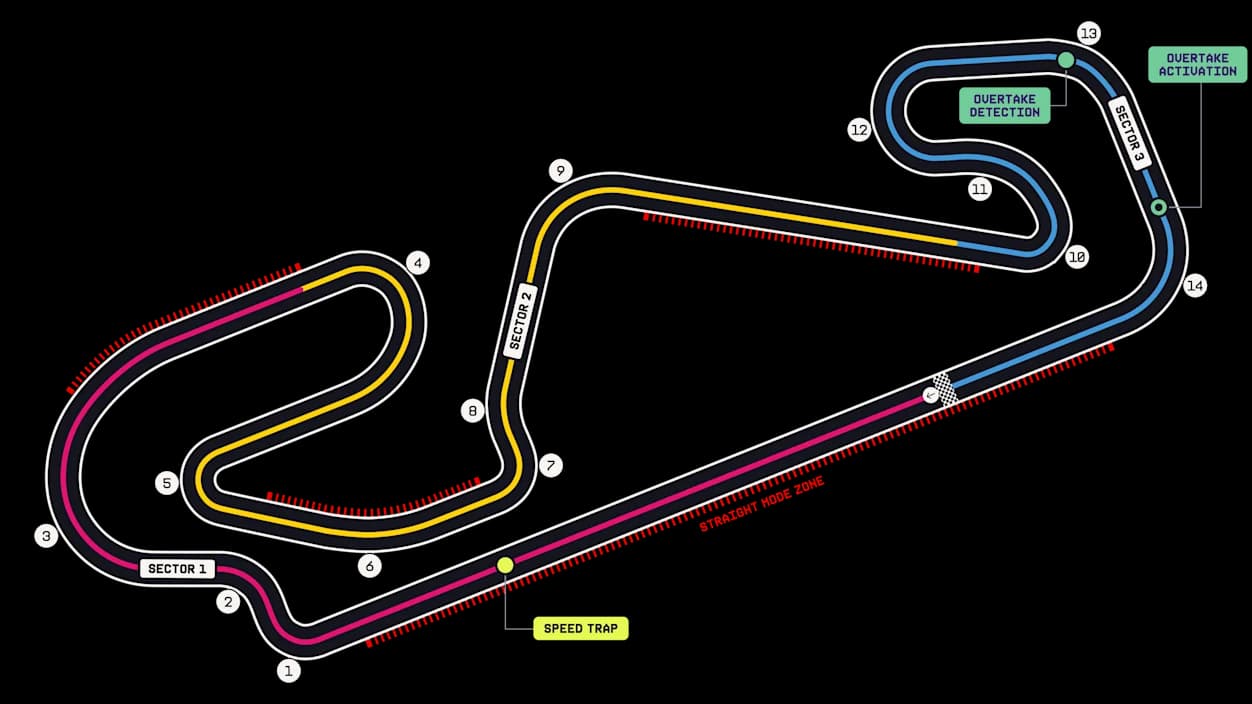

Circuit de Barcelona-Catalunya
Montmeló, Spain
- Length
- 4.657 km
- Corners
- 14
- First GP
- 1991
The Circuit de Barcelona-Catalunya, at Montmeló north of Barcelona, is a 4.657 km lap with 14 corners since the final chicane was removed in 2023. It mixes every corner type: a heavy braking zone at Turn 1 after the long main straight, the long, fast right-hander at Turn 3, medium-speed sweepers in the middle of the lap and a slower Turn 10 (La Caixa) before the run back to the line. For many years it was the standard pre-season test venue, so teams hold an unusually deep set of data on it; in 2026 only a private shakedown was run here before official testing in Bahrain. Because it rewards a balanced car, tyre management and aerodynamic efficiency matter more than outright power. Turn 1 is the best passing chance, but following closely through the quick middle section is difficult, so grid position and pit-stop strategy usually decide the race.
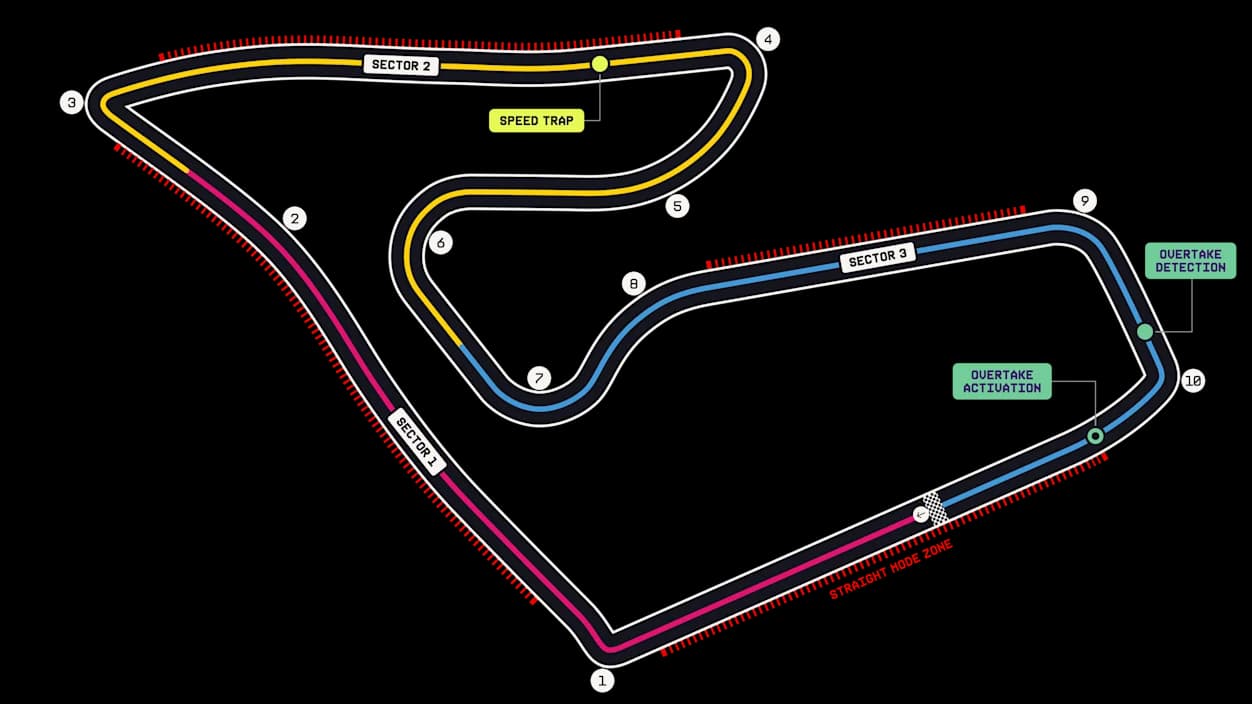

Red Bull Ring
Spielberg, Austria
- Length
- 4.326 km
- Corners
- 10
- First GP
- 1970
The Red Bull Ring sits in a natural bowl in the Styrian mountains near Spielberg. At 4.326 km it is one of the shortest laps on the calendar, with only 10 corners, three straights and a great deal of climbing: the circuit quotes a 65 m elevation range, with gradients of up to about 12% uphill and 9.3% downhill. Formula 1's own circuit guide describes the opening as three straights separated by a pair of uphill right-handers, after which the lap turns downhill through a run of quick corners. The short lap and long straights mean cars are often close together, so slipstreaming and a good exit from the previous corner decide most overtaking. Turn 1 was renamed the Niki Lauda Turn in 2019 and Turn 9 is the Jochen Rindt right-hander, both named for Austrian champions. A single mistake in qualifying can cost several places because the lap times are so tightly packed.
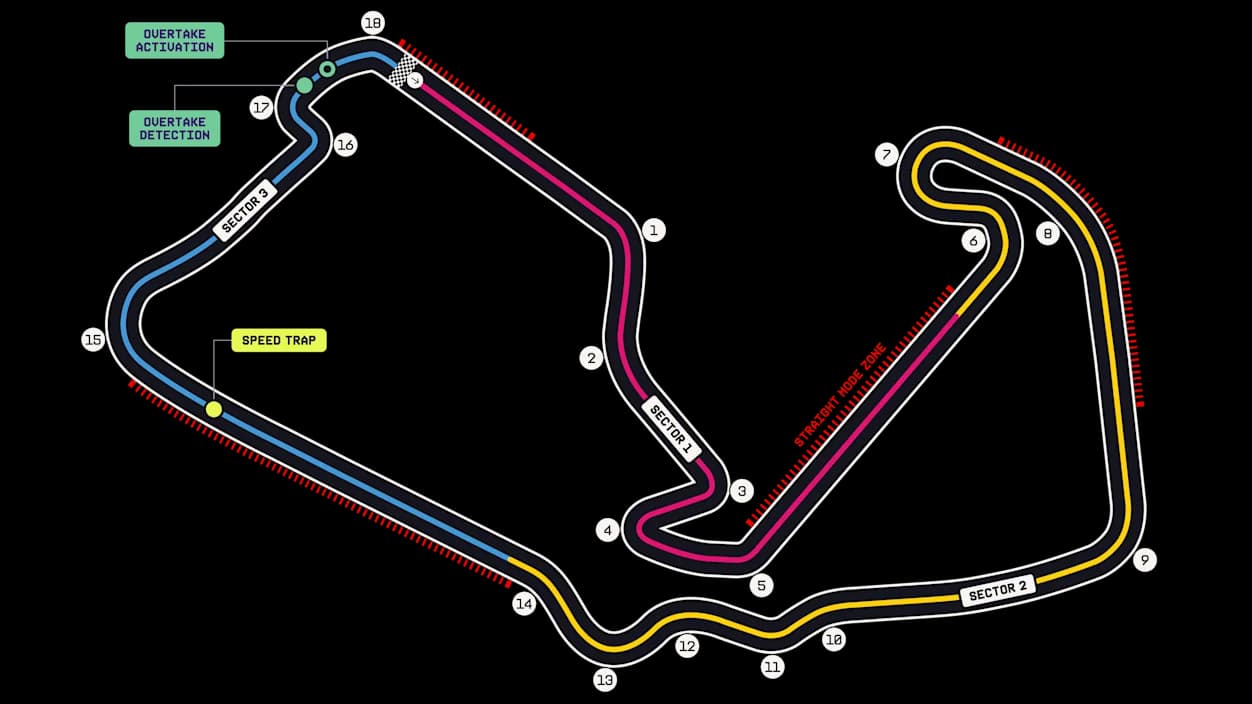

Silverstone Circuit
Silverstone, Great Britain
- Length
- 5.891 km
- Corners
- 18
- First GP
- 1950
Silverstone is a 5.891 km, 18-corner circuit built on the site of a Second World War bomber airfield in Northamptonshire. Its reputation rests on a run of fast, high-downforce changes of direction: Copse, then the Maggotts, Becketts and Chapel sequence, followed by the Hangar Straight and the quick Stowe corner. Cars carry very high speed through all of it, so an aerodynamic weakness is exposed immediately. The lap is wide and open, and the weather often decides the picture, with rain or a change in wind direction altering the balance of the fast corners. The Arena section, added in 2010 (Village, The Loop and Aintree), and the Wing pit complex are the biggest modern changes. The lap record of 1:27.097 was set by Max Verstappen in 2020 and still stands.
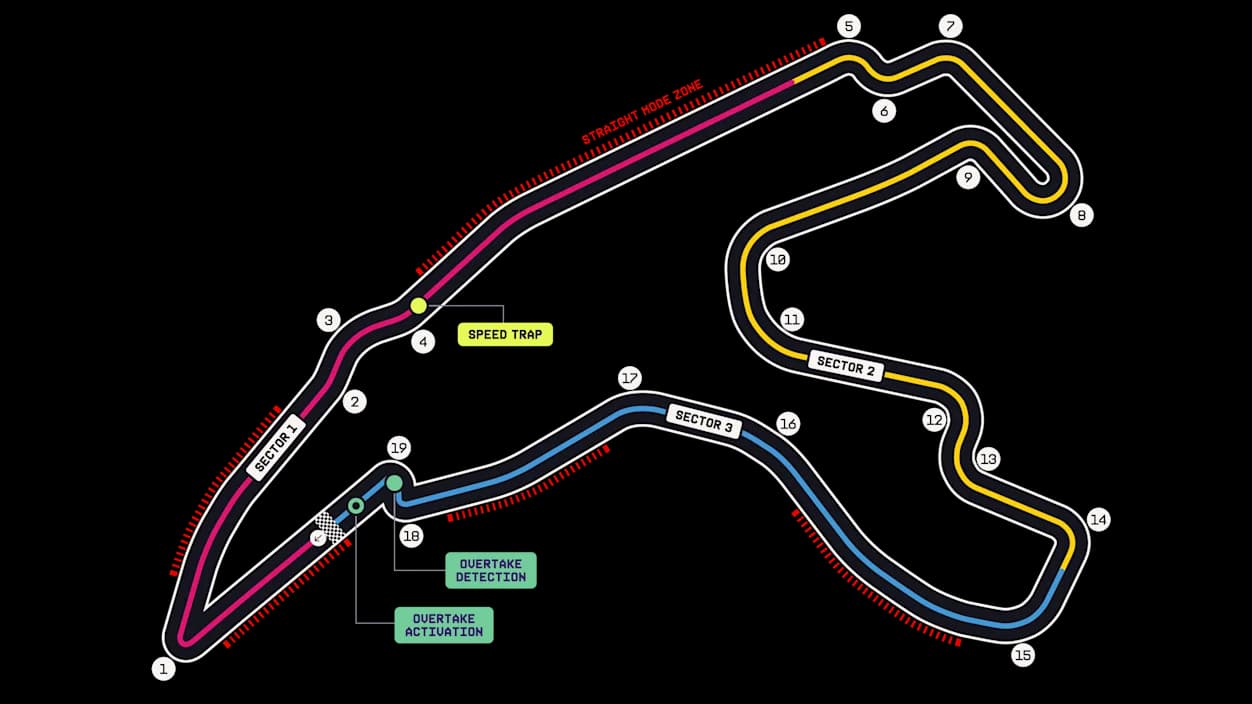

Circuit de Spa-Francorchamps
Spa, Belgium
- Length
- 7.004 km
- Corners
- 19
- First GP
- 1950
Spa-Francorchamps is the longest circuit on the calendar at 7.004 km, laid out in the Ardennes forest with 19 corners and roughly 100 m of elevation change. Eau Rouge and Raidillon, the uphill left-right-left after the first corner, are the best-known corners in the sport and have been used in every Formula 1 layout at Spa. The Kemmel Straight that follows is the main overtaking area, and Pouhon, taken close to flat-out, and the fast Blanchimont test downforce and driver commitment through the rest of the lap. The weather adds another layer: it can rain on one part of the circuit while another stays dry, which regularly changes tyre strategy mid-race. The Bus Stop chicane at Turn 19 closes the lap and is the last overtaking chance before the line.
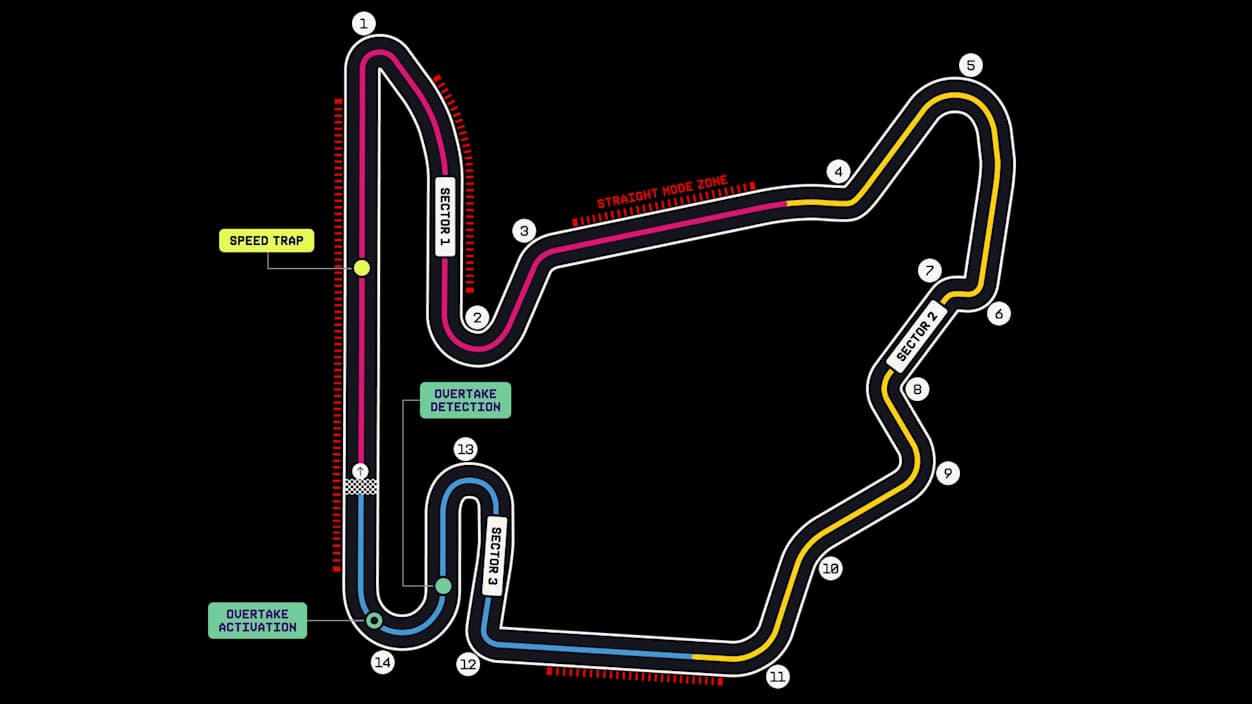

Hungaroring
Budapest, Hungary
- Length
- 4.381 km
- Corners
- 14
- First GP
- 1986
The Hungaroring, north-east of Budapest, is a 4.381 km lap with 14 corners and almost no straight of any length, which is why it is often compared with a karting circuit. Teams typically run high downforce, close to Monaco levels, and finding a rhythm through the linked corners is what produces lap time. Overtaking chances are few, so qualifying position matters a great deal here. The main overtaking spot is Turn 1 at the end of the start/finish straight. Summer heat makes tyre management a key part of the race.
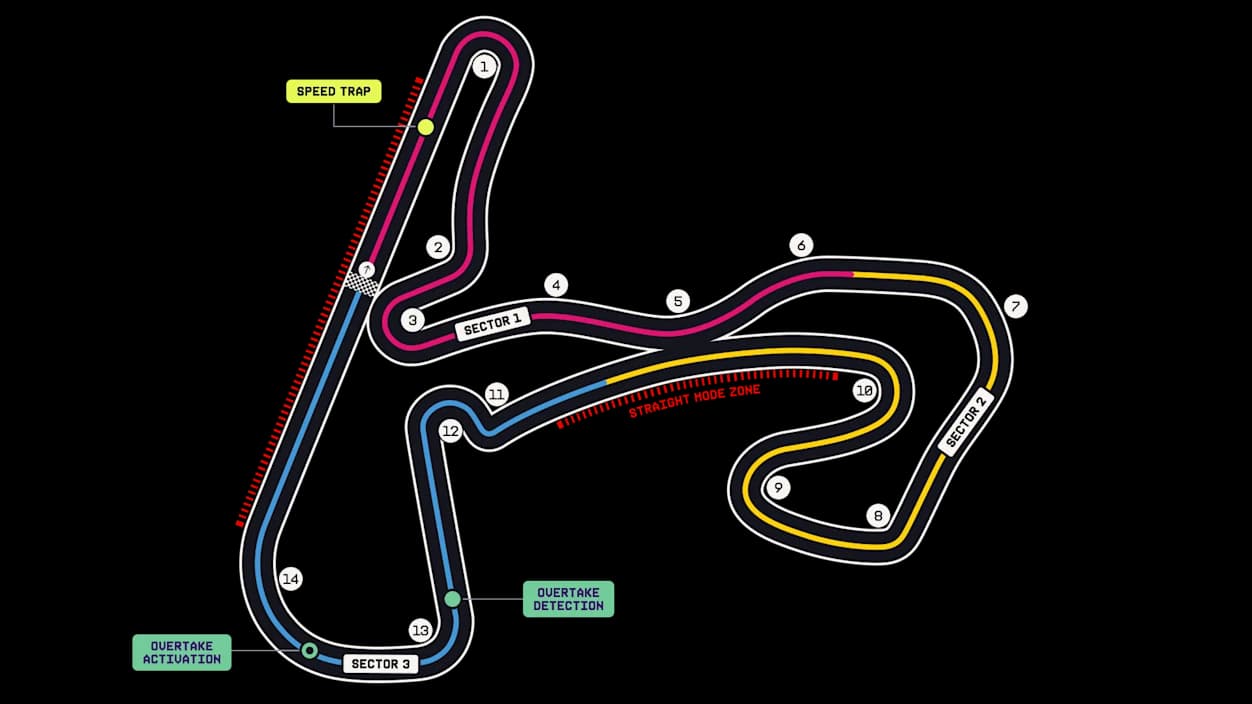

Circuit Zandvoort
Zandvoort, Netherlands
- Length
- 4.259 km
- Corners
- 14
- First GP
- 1952
Zandvoort is a 4.259 km, 14-corner circuit that swoops through the sand dunes on the Dutch North Sea coast. Its elevation changes and old-school feel make it a driver's circuit, and it is one of the few current tracks to use banked corners: Turn 3 (Hugenholtzbocht) and the final Turn 14 (Arie Luyendyk) let drivers carry speed and use a higher line, which also gives a second option for overtaking. Tarzan, the hairpin at Turn 1 at the end of the start/finish straight, is the main passing place. The layout is narrow, and sand blowing onto the track from the dunes can reduce grip. Grip changes with wind and sand across the weekend, so a stable car and confident braking matter as much as peak downforce.
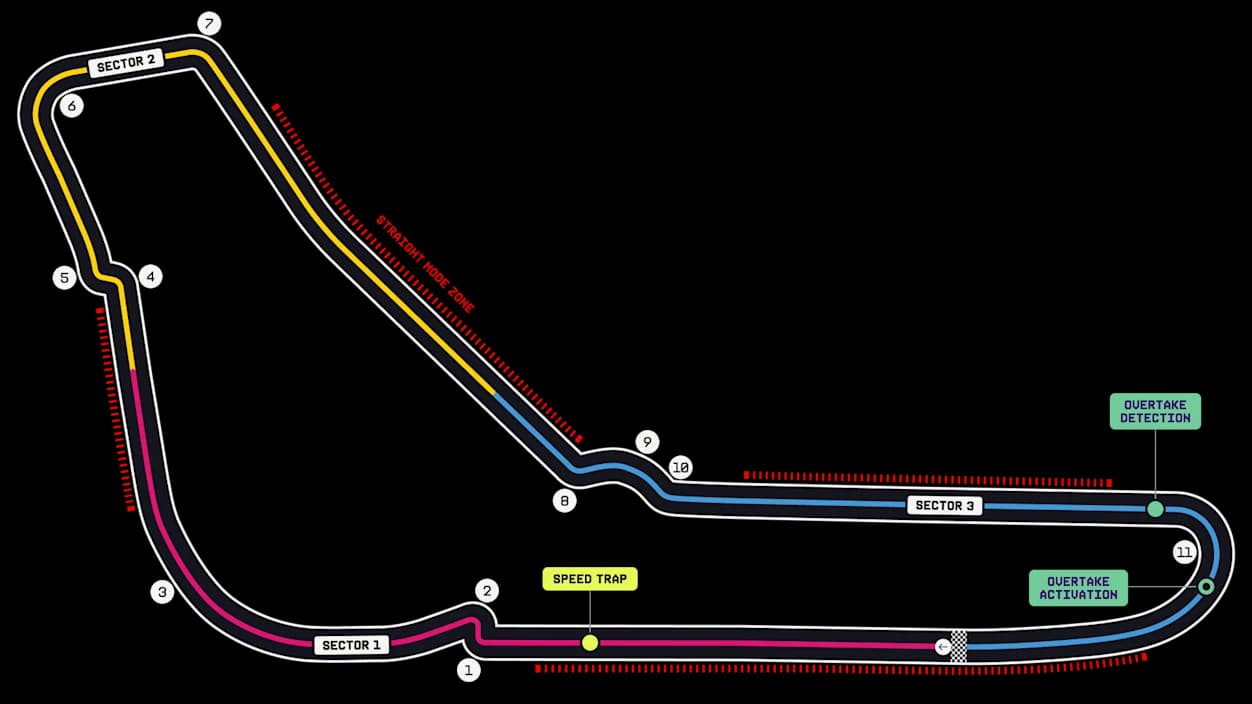

Autodromo Nazionale Monza
Monza, Italy
- Length
- 5.793 km
- Corners
- 11
- First GP
- 1950
Monza is the fastest track on the calendar: a 5.793 km lap with only 11 corners, on which cars are at full throttle for about 80% of the lap. They reach maximum speed on the 1.1 km start/finish straight and then brake from around 350 km/h to about 70 km/h for the Variante del Rettifilo chicane, one of the best overtaking places in the championship. Teams run their lowest-downforce wings of the year. The circuit sits inside the Parco di Monza, a former royal park north of Milan. Its long straights and tight chicanes reward good traction and brake stability, and much of the old banking is still visible beside the modern track near the Curva Alboreto (the Parabolica).
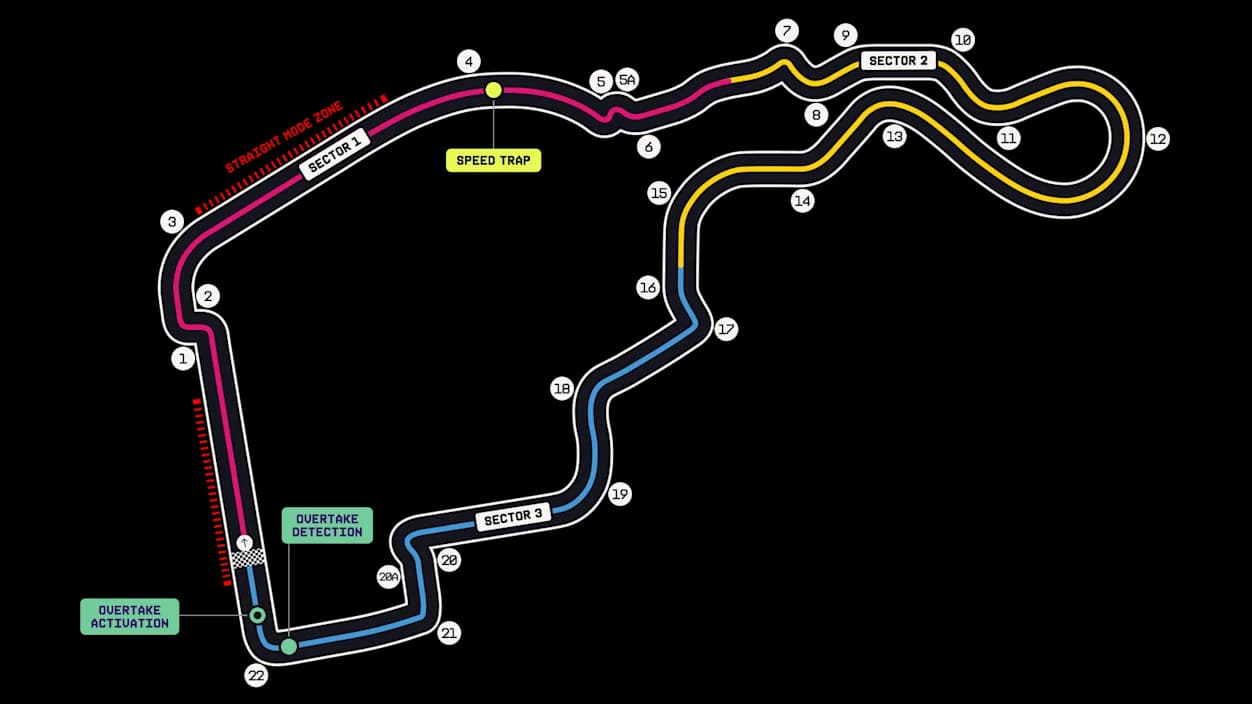
Madring
Madrid, Spain
- Length
- 5.414 km
- Corners
- 22
- First GP
- 2026
Madring is a 5.414 km, 22-corner circuit around the IFEMA exhibition complex in Valdebebas, in the Barajas district of north-east Madrid near the airport. It is a hybrid of temporary and permanent track designed by Jarno Zaffelli, with two short tunnels running under an elevated motorway and a sharp downhill drop between Turns 7 and 9. Its best-known feature is La Monumental, a semicircular banked corner at Turn 12 with about 13.5 degrees of banking, the longest banked turn on the calendar. The circuit also has the first covered paddock in Formula 1. The main straight is short and there are two Straight Mode zones for the 2026 cars, but drivers criticised the lack of overtaking after the first race.
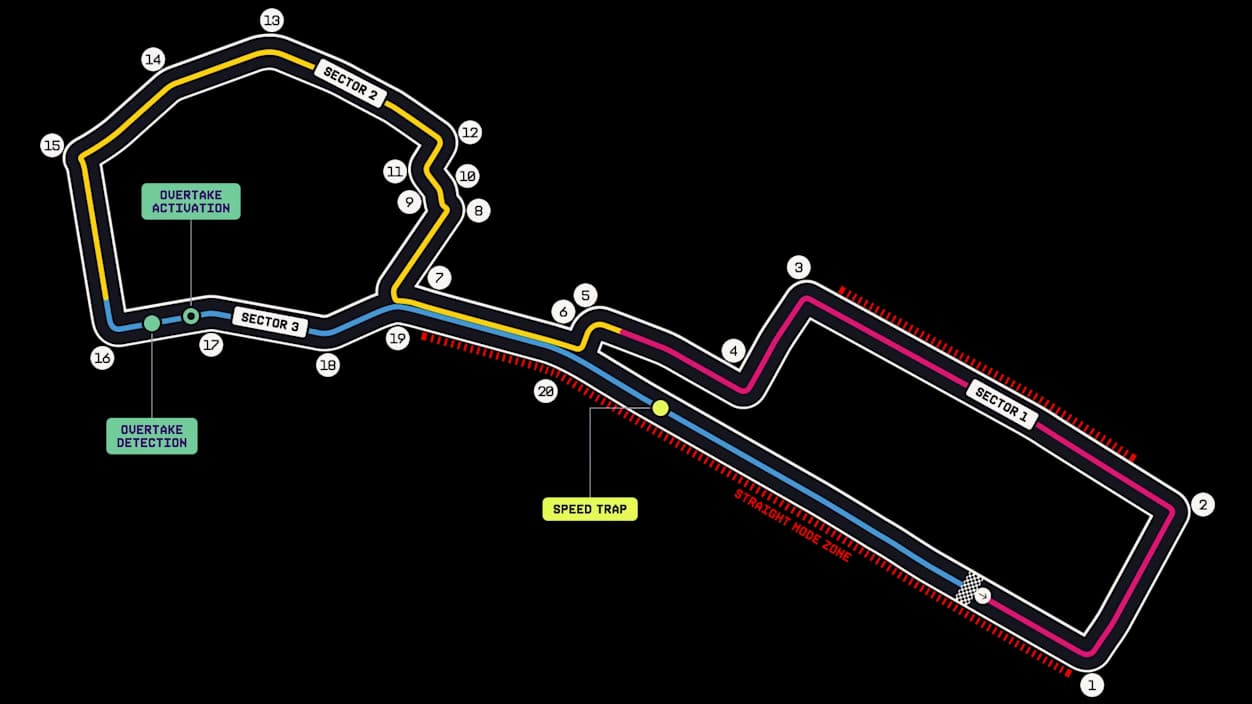

Baku City Circuit
Baku, Azerbaijan
- Length
- 6.003 km
- Corners
- 20
- First GP
- 2016
The Baku City Circuit is a 6.003 km anti-clockwise street layout with two very different halves. One half is flat, fast and open: the run along the Caspian waterfront and the roughly 2.2 km main straight on Neftchilar Avenue, where Valtteri Bottas was recorded at 378 km/h in 2016 qualifying. The other half is the walled Old City, where the road narrows to about 7.6 m at its tightest point and climbs past the Maiden Tower and the castle section at Turn 8. The contrast makes setup a compromise. Teams trim wings for the long straight, then ask drivers to place the car millimetres from unforgiving walls in the Old City, where a small mistake ends a lap or a race. The long straight and the slipstream it creates produce more overtaking than the narrow layout suggests, and restarts here have a habit of reshuffling the field.
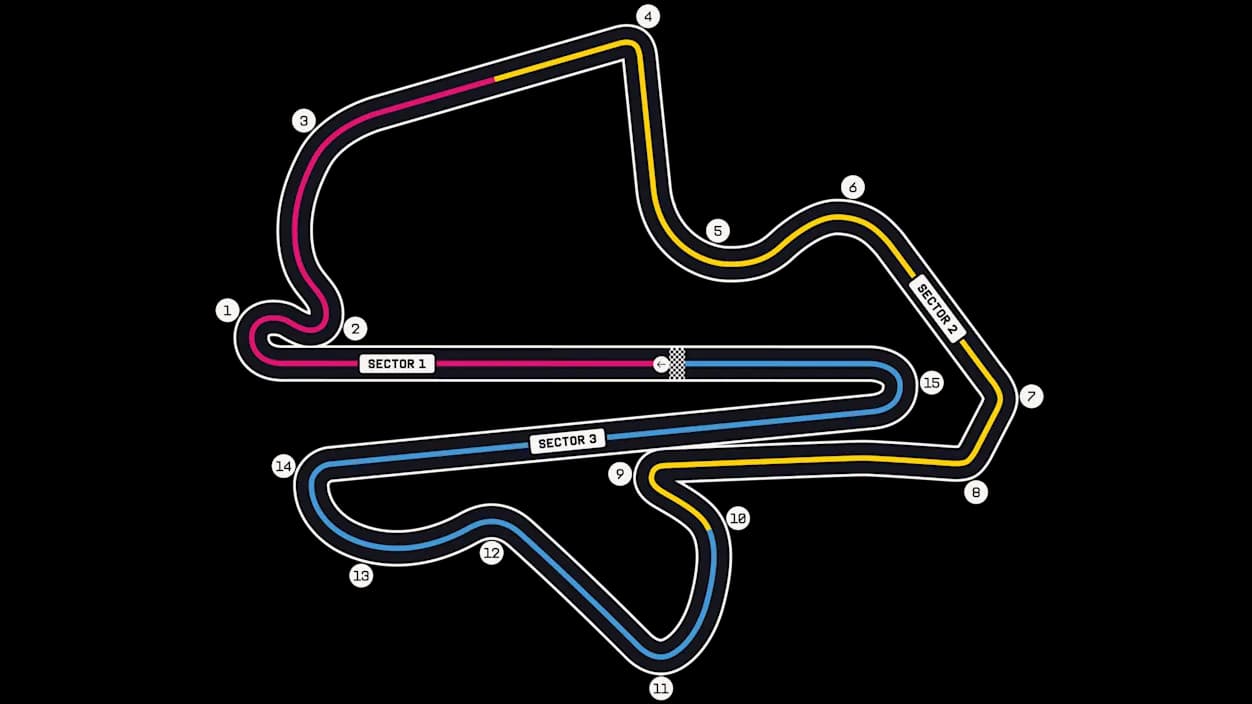

Sepang International Circuit
Sepang, Kuala Lumpur, Malaysia
Sepang hosts the relocated 2026 Bahrain Grand Prix on 4 October 2026, after the race at Bahrain was cancelled because of the Iran war.
- Length
- 5.543 km
- Corners
- 15
- First GP
- 1999
Sepang International Circuit lies south of Kuala Lumpur, close to the international airport. The clockwise lap is 5.543 km long with 15 turns and only about 18 m of elevation change. It is wide, with two long straights joined by slow corners, so it rewards braking and traction, and Hermann Tilke's layout gives drivers several lines through the bigger corners. Turns 1 and 2 form a tight hairpin complex, Turn 4 is known as the Langkawi Curve, and Turns 5 and 6 (the Genting Curve) are a fast sweeping section. The heat, humidity and abrasive surface put a lot of strain on the tyres, and heavy tropical rain can arrive with little warning. In 2026 Sepang hosts the Formula 1 Gulf Air Bahrain Grand Prix in Malaysia on 4 October (round 16 of the season), the race moved from Bahrain after the 2026 Iran war. It is F1's first race at Sepang since the 2017 Malaysian Grand Prix, and it is scheduled for 56 laps.

Marina Bay Street Circuit
Singapore, Singapore
- Length
- 4.927 km
- Corners
- 19
- First GP
- 2008
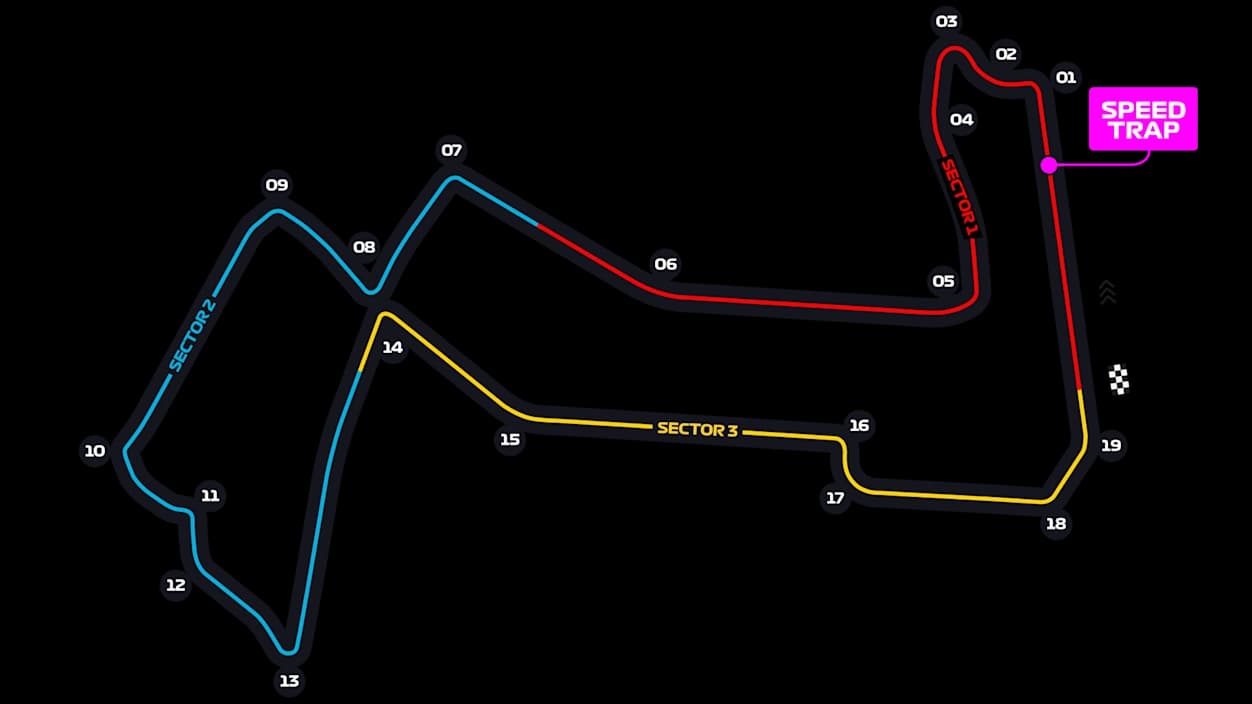
Marina Bay is a 4.927 km, 19-corner street circuit that runs clockwise around the city's waterfront and is raced entirely at night under roughly 1,600 floodlights. There is little room for error: walls line almost the whole lap, the track is bumpy and slow-speed, and the heat and humidity make it one of the most physically demanding races of the year. Lewis Hamilton has said it takes about double the energy of a single lap at Monaco. The layout was shortened for 2023, when the technical Turn 16-19 section on the Marina Bay floating platform was removed and replaced with a straight on Raffles Avenue. That change created a clear overtaking spot, and the lap record has since fallen from 1:41.905 on the old layout to 1:33.808. Turn 1 (Sheares) and Turn 7 (Memorial) are two of the corners that carry a name.
Circuit of the Americas
Austin, USA
- Length
- 5.513 km
- Corners
- 20
- First GP
- 2012
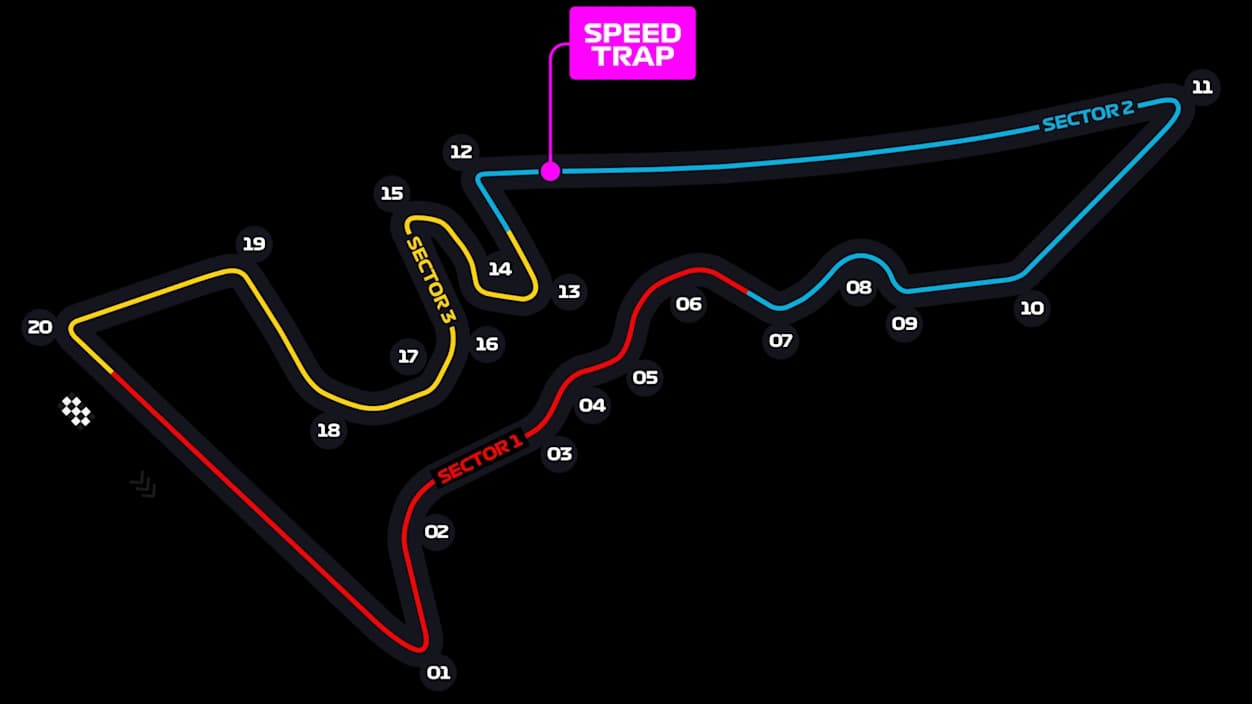
The Circuit of the Americas is a 5.513 km, 20-corner circuit just outside Austin, and a lap is a mix of borrowed ideas. Turn 1 is a blind, uphill climb of more than 11% to the highest point of the circuit, where the field funnels into a tight left-hander. Turns 3 to 6 are modelled on Silverstone's Maggotts-Becketts-Chapel sequence, and a back straight of about 1 km ends in a hairpin that is the circuit's biggest overtaking chance. The circuit is known for its bumps, and the constant direction changes in the Esses punish cars that cannot rotate quickly. Tyre wear and setup are a balancing act, because the same car must be stable through the fast sweepers and still brake well into the slow corners at the end of the straights.

Autódromo Hermanos Rodríguez
Mexico City, Mexico
- Length
- 4.304 km
- Corners
- 17
- First GP
- 1963
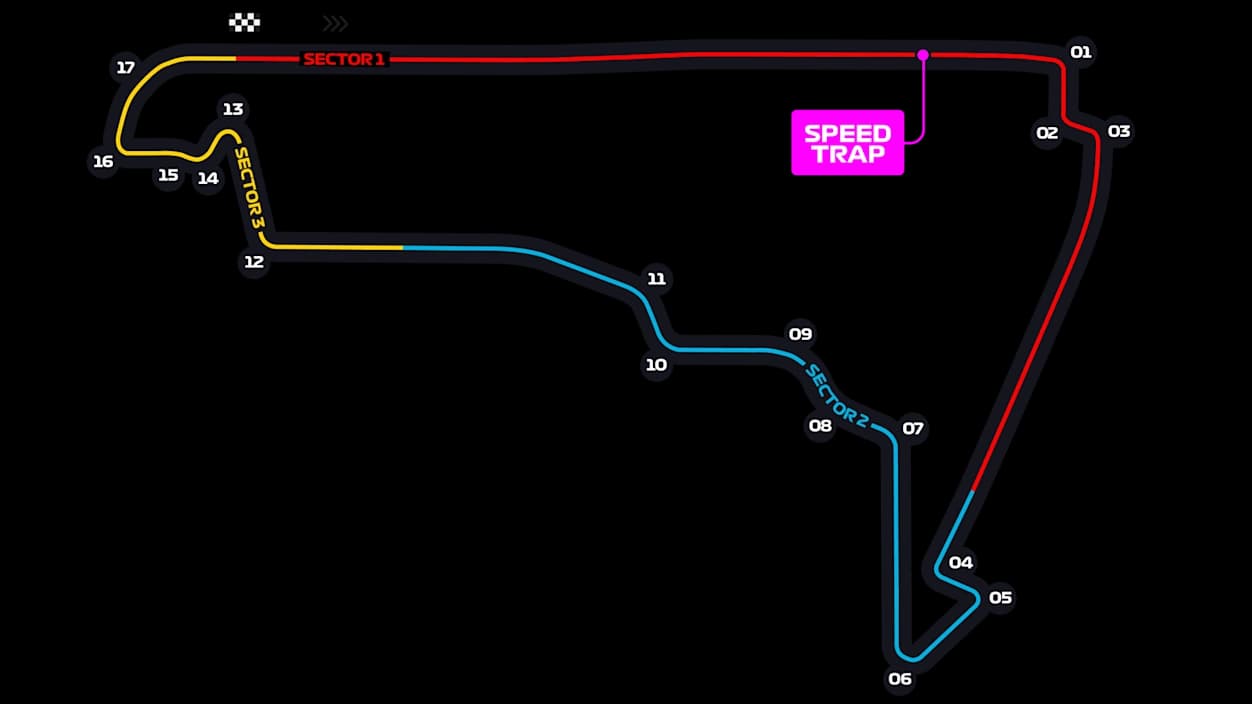
The Autódromo Hermanos Rodríguez sits at 2,238 m above sea level in Mexico City, and the thin air shapes everything about the weekend. Cars produce less downforce and cooling is harder, so teams run maximum-downforce wings and still reach high top speeds on the roughly 1.2 km front straight. The 4.304 km lap has 17 corners, and there is a long run from the grid to the first braking zone. The layout then turns into a technical section of slow and medium-speed corners, and finishes with the Foro Sol stadium, where the track winds through the baseball stadium in front of packed stands. Cooling and brake temperatures are the main engineering challenges.

Autódromo José Carlos Pace
São Paulo, Brazil
- Length
- 4.309 km
- Corners
- 15
- First GP
- 1973
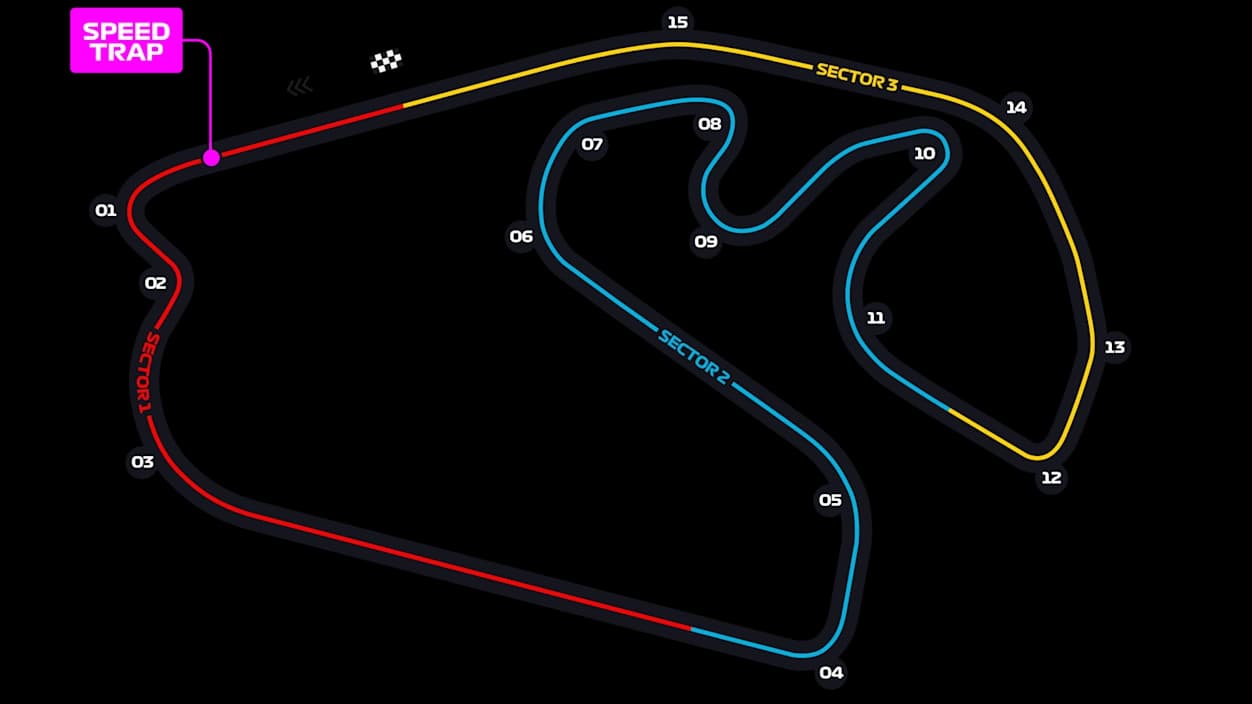
Interlagos is a compact, 4.309 km lap that runs anti-clockwise over hilly ground, with about 40 m of elevation change. The lap begins at the Senna S, a downhill left-right that is the main overtaking spot, then drops to Descida do Lago, the lowest point of the circuit. From there it climbs through the middle sector before the final corners and Subida dos Boxes, three left-hand kinks uphill onto the start-finish straight. The track is short, bumpy and constantly changes gradient, so the field is tightly packed and slipstreaming works well. Weather is the wild card: sudden rain is common, and a dry-set-up car can be caught out within a lap. With only 15 corners, lap time is decided by traction out of the slow corners and a good run onto the straights.
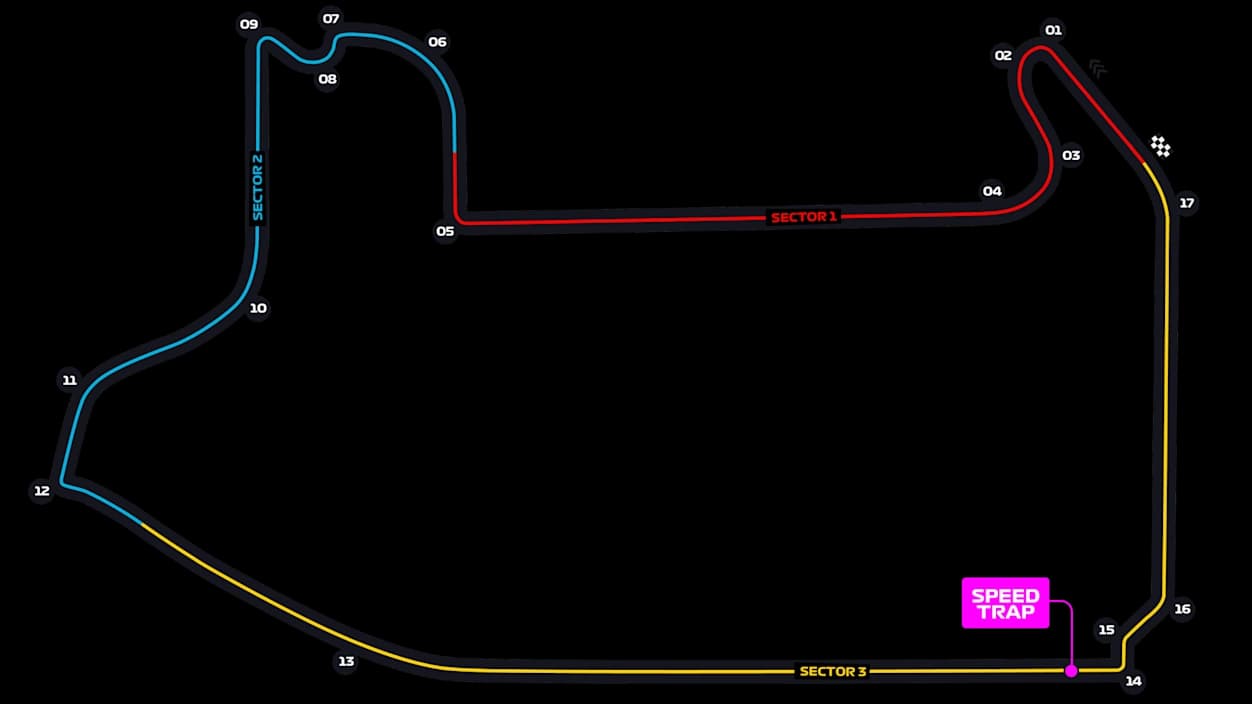
Las Vegas Strip Street Circuit
Las Vegas, USA
- Length
- 6.201 km
- Corners
- 17
- First GP
- 2023
The Las Vegas Strip Circuit is a 6.201 km, 17-corner street circuit designed by Carsten Tilke, built on public roads that include a stretch of the Strip. It is one of the fastest street layouts on the calendar: the main straight is about 1.9 km long, and Yuki Tsunoda was recorded at 358.3 km/h in 2025. The lap passes the Sphere, Caesars Palace, Bellagio and Paris Las Vegas. The circuit is cold at night, and low temperatures make it hard to get heat into the tyres, especially on a track with so many long straights and slow corners. Drivers get long stretches of low-load running followed by heavy braking into slow corners, a combination that keeps engineers busy with brake cooling and tyre warm-up.
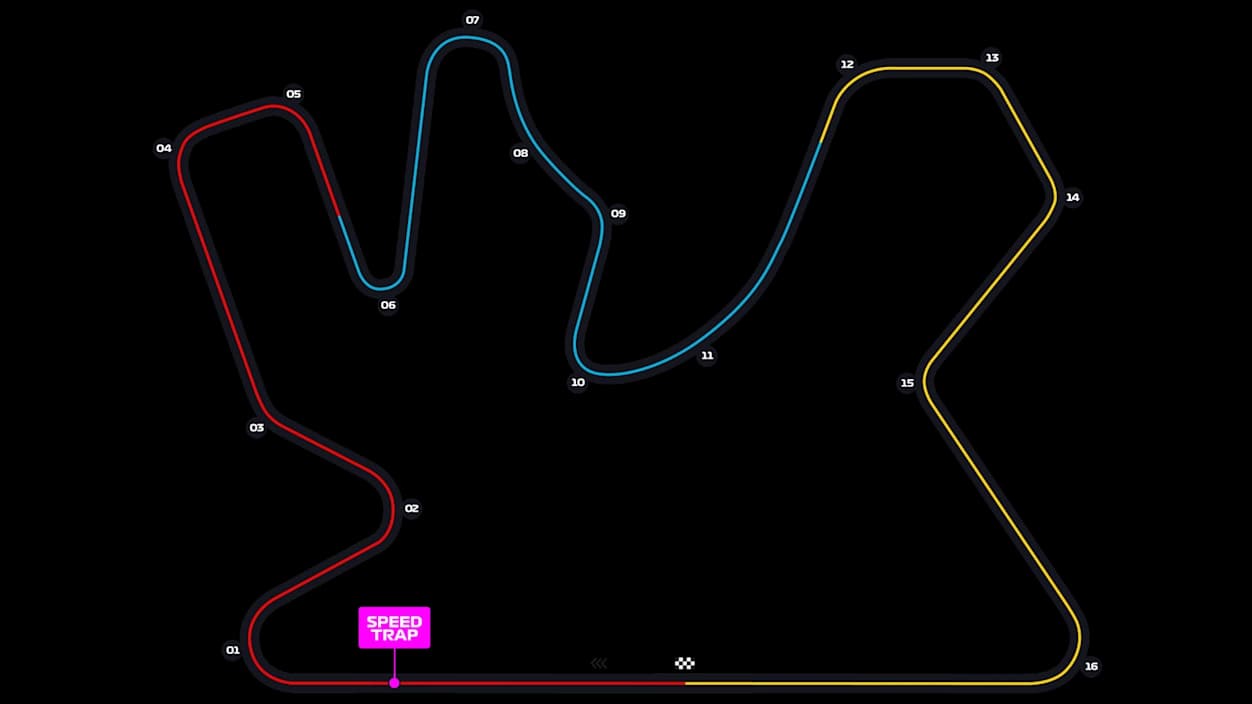

Lusail International Circuit
Al Daayen, Qatar
- Length
- 5.419 km
- Corners
- 16
- First GP
- 2021
Lusail is a 5.419 km, 16-corner circuit just outside the city of Lusail, north of Doha, with a main straight of 1.068 km. It is a fast, flowing layout dominated by medium- and high-speed corners, and it is raced at night under permanent floodlights. The track is surrounded by artificial grass intended to stop desert sand blowing onto the surface. The long sequences of fast corners make it one of the hardest circuits on the tyres and on the drivers' necks. In 2023 the race was run in extreme heat and humidity that left several drivers struggling, and a per-set tyre-lap limit was imposed because of kerb damage. The circuit's rhythm rewards a well-balanced car more than raw straight-line speed.
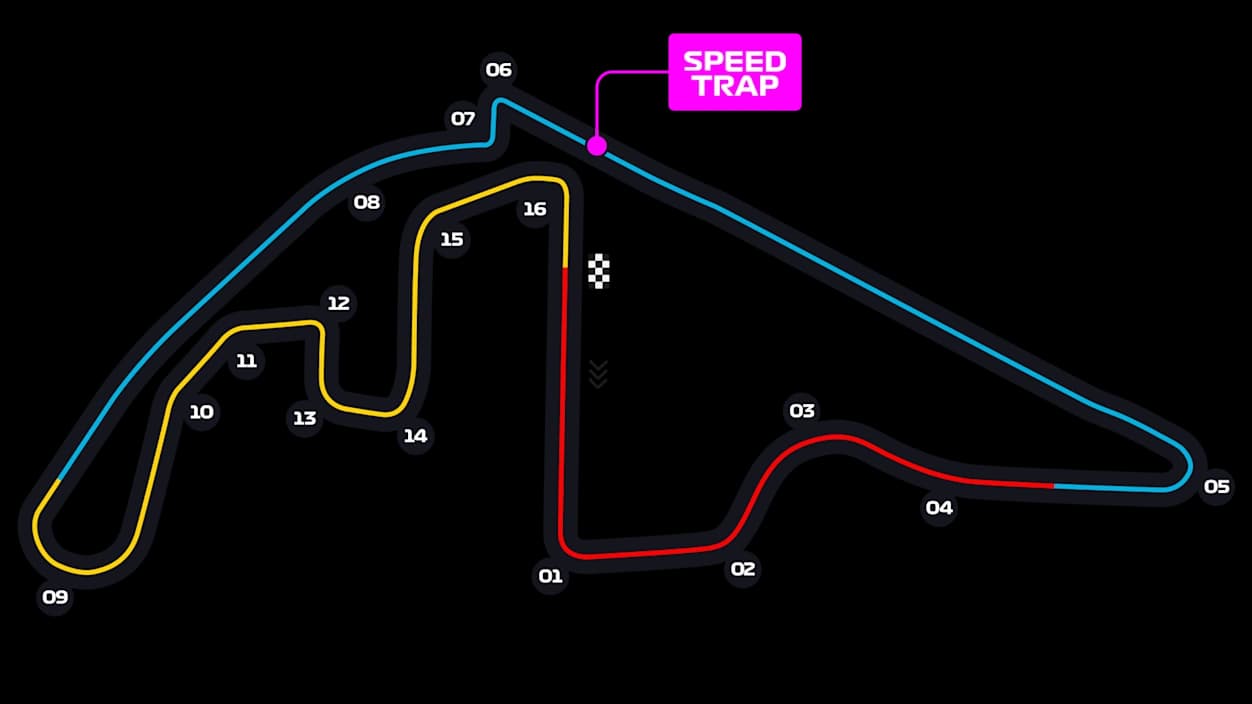

Yas Marina Circuit
Abu Dhabi, UAE
- Length
- 5.281 km
- Corners
- 16
- First GP
- 2009
Yas Marina is a 5.281 km, 16-corner circuit on Yas Island, designed by Hermann Tilke. The lap begins at sunset, and cars pass under the W Abu Dhabi - Yas Island hotel, while the pit exit runs through a tunnel beneath the track. The longest straight is about 1.14 km, the main overtaking place, and it leads into a slow corner where the braking is heavy. The circuit was changed for 2021. Turns 4 to 6 were replaced by a single, less severe hairpin, and the old Turns 11 to 14 became a sweeping banked corner. Both changes were made to improve racing and allow cars to follow each other more closely. The final sector is still a slow, technical sequence beneath the hotel.
Other circuits
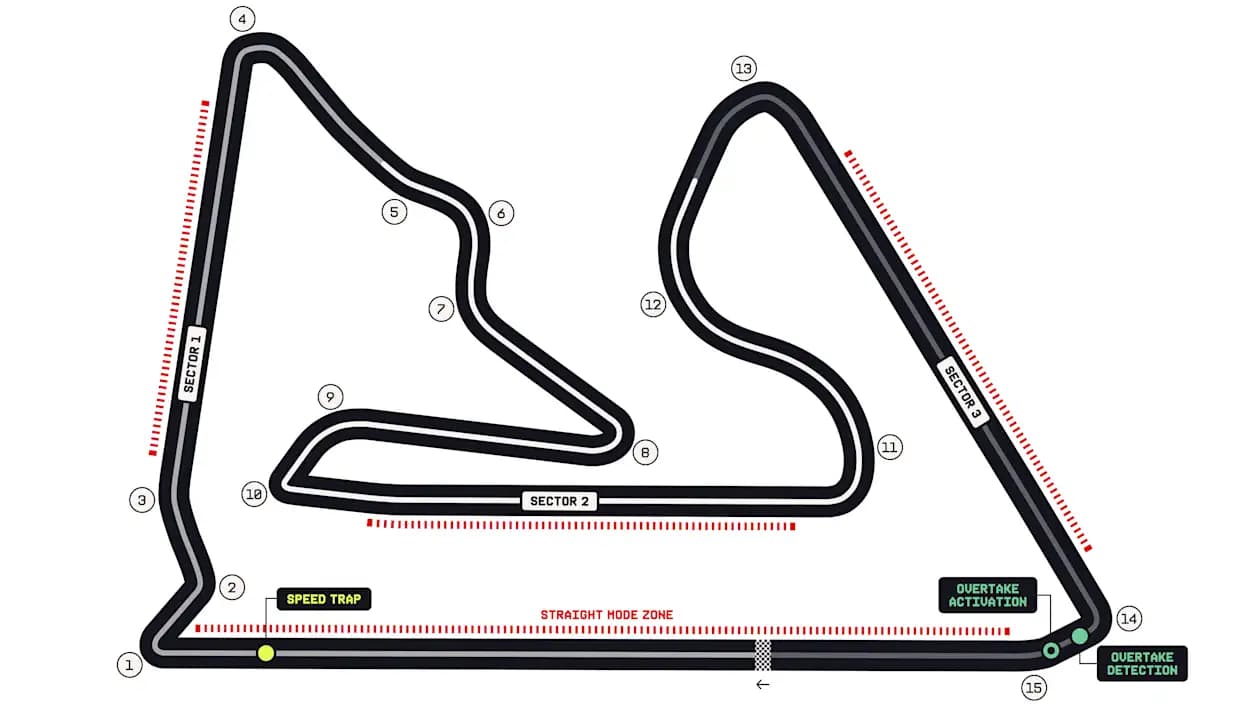

Bahrain International Circuit
Sakhir, Bahrain
Bahrain International Circuit hosts no Formula 1 race in 2026: the Bahrain Grand Prix, postponed after the outbreak of the Iran war, was relocated to Sepang, Malaysia, on 4 October.
- Length
- 5.412 km
- Corners
- 15
- First GP
- 2004
Bahrain International Circuit is a 5.412 km Hermann Tilke design in the desert at Sakhir, opened in March 2004 at a cost of about $150 million. The Grand Prix layout has 15 corners and long straights that end in heavy braking zones, which gives it more overtaking chances than most modern circuits. The first is at Turn 1, which was renamed after Michael Schumacher in 2014, and the lap includes several tight, slow corners where traction out of the turn matters as much as top speed. Sand blowing onto the track and an abrasive surface make rear-tyre wear one of the main concerns, and grip changes as the evening cools. The circuit has other layouts: a 6.299 km endurance version used for the 2010 race and a 3.543 km outer circuit used for the 2020 Sakhir Grand Prix. The Grand Prix has been held in the evening under floodlights since 2014.
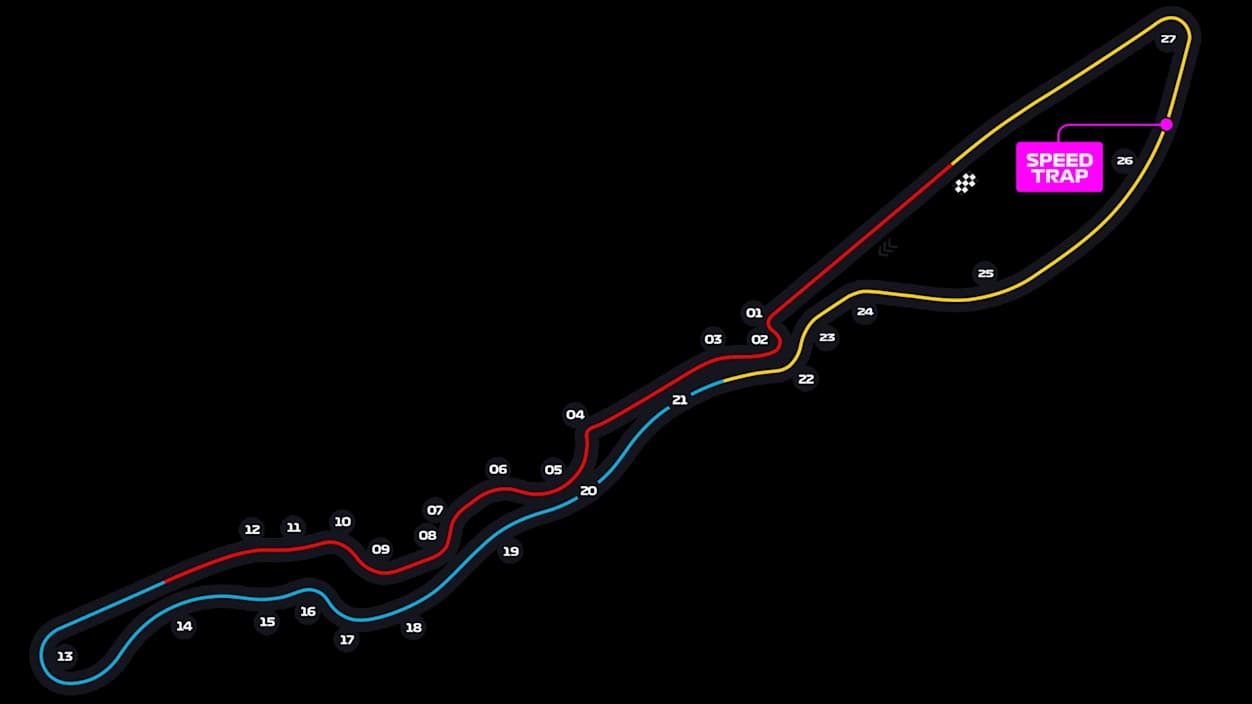

Jeddah Corniche Circuit
Jeddah, Saudi Arabia
The 2026 Saudi Arabian Grand Prix was cancelled on 14 March 2026 because of the Iran war; the race is scheduled to return in 2027.
- Length
- 6.174 km
- Corners
- 27
- First GP
- 2021
Jeddah Corniche Circuit is a 6.174 km street circuit along the Red Sea waterfront and the third-longest track in Formula 1 after Spa-Francorchamps and Las Vegas. It has 27 corners squeezed between concrete walls, but the corners are mostly fast and the drivers take them in long, blind sequences. It is the fastest street circuit on the calendar: in 2025 the average pole-position speed was 254.6 km/h. Designed by Carsten Tilke, it was built in a few months and hosted the first Saudi Arabian Grand Prix in December 2021. The circuit is almost entirely flat, so the challenge is confidence and precision rather than elevation. The Turn 13 banked corner and the tight final corners test car balance, and the walls leave little room for error, so safety cars and red flags have been common. The main pass usually comes at the end of the longest straights, where cars brake heavily from around 300 km/h.